Before you publish another devotional, pause and ask yourself: is your infrastructure strong enough to quietly support the calling God has placed in your hands?
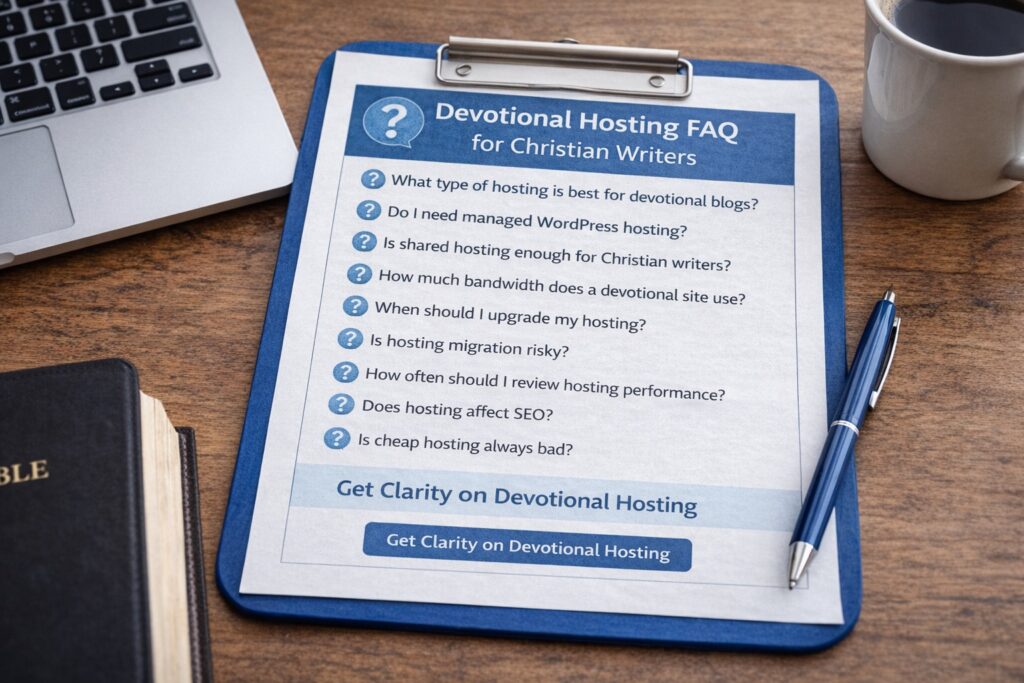
Devotional Hosting FAQ for Christian Writers exists to answer the most common infrastructure questions ministry-focused writers wrestle with once they move beyond hobby blogging. Hosting may feel technical, but for devotional writers, it directly affects consistency, credibility, and confidence.
Quick-Start: Build the Right Foundation First
Before troubleshooting performance or upgrades, make sure your WordPress foundation is configured correctly from the beginning.
Start the 60-minute Quick-Start1. What type of hosting is best for Christian devotional writers?
Most devotional writers do not need enterprise-level infrastructure in the beginning. However, they do need reliability, speed stability, and scalable headroom. Quality shared hosting can work early on, but only if it includes strong uptime guarantees and performance safeguards.
As your archive grows and traffic increases, managed WordPress hosting becomes increasingly attractive. It reduces maintenance pressure and provides proactive performance tuning. The key is not buying “big,” but buying appropriately structured.
If you need a structured decision path, review the guide on how to choose hosting for Christian devotional writers . It walks through evaluation without overcomplication.
2. Is shared hosting enough for a devotional website?
Shared hosting is often sufficient during early ministry phases. Most devotional blogs begin with modest traffic and simple WordPress configurations.
The risk appears when:
- Plugins multiply without optimization
- Traffic spikes during seasonal devotionals
- Email list growth increases database load
- Hosting neighbors consume excessive server resources
If performance becomes inconsistent or page loads slow dramatically during peak hours, shared hosting may no longer be adequate.
3. How much bandwidth does a devotional site typically use?
Devotional blogs are generally text-focused. That means bandwidth usage is modest unless you embed high-resolution images, video libraries, or downloadable study guides.
Bandwidth strain usually comes from:
- Uncompressed images
- Unoptimized themes
- Excessive plugin requests
- Unexpected viral sharing
Monitoring bandwidth trends quarterly prevents sudden overage issues. Sustainable infrastructure is about awareness, not guessing.
4. When should I upgrade my hosting plan?
Upgrade timing is not emotional. It is signal-based.
Clear upgrade signals include:
- Repeated resource limit warnings
- Slower admin dashboard performance
- Traffic growth outpacing plan limits
- Frequent throttling during peak hours
Waiting too long can damage reader trust. Upgrading early preserves stability and prevents disruption.
5. Do I need managed WordPress hosting?
Managed hosting removes technical friction. Updates, backups, caching, and performance tuning are handled proactively.
For writers who prefer focusing on content over technical oversight, managed hosting often provides peace of mind. It reduces troubleshooting cycles and increases publishing rhythm consistency.
However, if you are comfortable maintaining plugins, optimizing performance, and monitoring logs, quality non-managed hosting can still work effectively.
6. How often should I review my hosting performance?
Quarterly reviews are ideal.
During these reviews, evaluate:
- Page load speed
- Uptime reports
- Database size growth
- Plugin redundancy
- Security alerts
Performance audits prevent slow degradation. Devotional ministries grow gradually. Infrastructure should grow intentionally alongside it.
7. Is hosting migration risky?
Migration carries some risk, but reputable hosts provide structured migration assistance.
Before migrating:
- Ensure full backups exist
- Confirm DNS timing
- Choose low-traffic migration windows
- Test staging environments if available
Most migrations are smooth when planned. Fear should not prevent strategic upgrades.
8. What is the biggest hosting mistake devotional writers make?
The most common mistake is ignoring infrastructure until failure forces action.
Other frequent errors include:
- Choosing based solely on price
- Ignoring resource caps
- Skipping backups
- Overloading the site with unnecessary plugins
Infrastructure maturity produces confidence. Reactive hosting produces stress.
Why This FAQ Matters
Devotional Hosting FAQ for Christian Writers is not technical trivia. It is structural clarity.
When hosting is aligned properly:
- You publish without hesitation.
- You expand without fear.
- You protect years of obedience.
- You build quietly but securely.
Hosting should be invisible. It should simply work.
Ready to build with confidence?
Follow the full setup guide, then choose hosting aligned with your growth stage.
Start the 60-minute Quick-StartHosting picks to explore:
✨ About the Author
I’m Nehemiah Maxwell, a faith-driven writer and content strategist helping Christian women turn ministry ideas into thriving online platforms. Through WhichHostIsBest.com, I teach step-by-step hosting and WordPress strategies that make ministry setup simple—so you can focus on what matters most: serving others with clarity and grace. I believe that when faith, clarity, and excellence come together, Kingdom impact multiplies.