
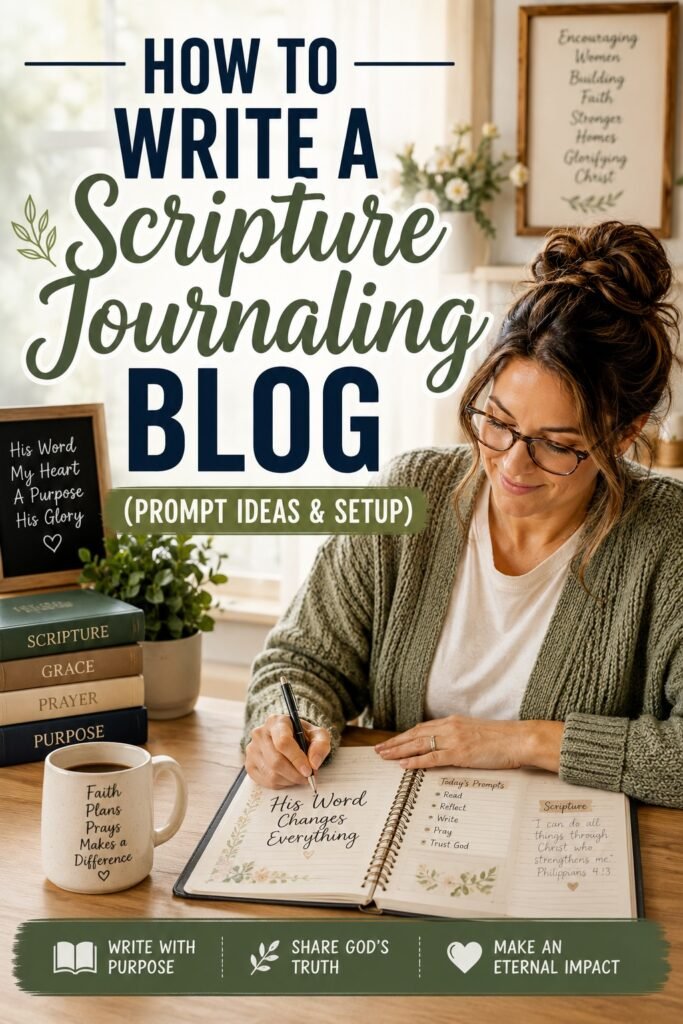
How to write a Scripture journaling blog becomes much easier when you stop thinking of it as a complicated online project and start seeing it as an extension of something you may already love: reading God’s Word, reflecting on it honestly, and sharing what He is teaching you.
You do not need to be a Bible scholar, a professional writer, or a technology expert to begin. A Scripture journaling blog can be simple, personal, practical, and deeply encouraging. It can give you a place to share journaling prompts, devotional reflections, study methods, printable ideas, and lessons from your own time with God.
The key is to build it carefully. You want your blog to be rooted in Scripture, honest about your own experience, and genuinely helpful to the women who find it.
This guide will walk you through the basic setup, show you what kinds of posts you can write, and give you plenty of prompt ideas so you are not staring at a blank screen wondering what to publish first.
What Is a Scripture Journaling Blog?
A Scripture journaling blog is a faith-based website focused on helping readers engage with the Bible through writing, reflection, prayer, study, and creative expression.
Depending on your interests, your blog might include:
- Scripture writing plans
- Bible journaling prompts
- Devotional reflections
- Verse-by-verse journaling ideas
- Prayer journaling guidance
- Printable worksheets
- Personal lessons from your quiet time
- Creative Bible study methods
Your blog does not have to look like anyone else’s. One woman may focus on colorful Bible journaling and hand lettering. Another may write thoughtful reflections for women walking through grief. Someone else may create simple prompts for busy mothers who only have ten quiet minutes in the morning.
The strongest blogs usually have a clear emphasis. You can still write on several related topics, but readers should quickly understand who you help and what they will find.
Choose the Woman You Want to Encourage
Before thinking about colors, fonts, or a blog name, think about your reader.
Is she:
- A new Christian learning how to study the Bible?
- A busy mother trying to rebuild a quiet-time routine?
- A woman walking through a difficult season?
- A creative believer who enjoys art, lettering, and journaling?
- Someone who wants deeper reflection without complicated study methods?
You do not have to exclude everyone else. This simply helps you write with greater clarity.
For example, “Scripture journaling for everyone” is broad. “Simple Scripture journaling for busy Christian women” gives you a much clearer direction. It helps you know what tone to use, how long your prompts should be, and what problems your articles should solve.
Decide What Your Blog Will Focus On
A Scripture journaling blog can cover many subjects, but beginning with a few dependable categories will make planning easier.
You might choose four or five categories such as:
- Scripture Journaling Prompts
- Prayer Journaling
- Bible Study Methods
- Faith During Hard Seasons
- Printables and Journaling Resources
These categories give your blog structure without boxing you in. They also help readers find related content once you begin publishing regularly.
Try not to create too many categories at the beginning. Ten empty categories can make a new blog feel scattered. A few well-developed sections are much more useful.
Choose a Name That Leaves Room to Grow
Your blog name should be memorable, easy to spell, and connected to your message. It does not have to explain everything you will ever write about.
Names built around words such as grace, truth, stillness, rooted, Word, faith, journal, or Scripture may fit naturally, but originality matters too.
Before settling on a name, ask:
- Is it easy to remember?
- Can someone spell it after hearing it once?
- Does it still work if my content expands later?
- Does it reflect the tone I want my ministry to have?
A peaceful, reflective blog may need a different kind of name than a bright, creative Bible journaling site. Choose something that feels true to your voice rather than something that merely sounds trendy.
Set Up a Simple, Welcoming Website
Your website does not need to be elaborate. It needs to be clear, readable, and easy to use.
A basic Scripture journaling blog should include:
- A simple homepage
- An About page
- A page or section for blog posts
- Clear categories
- An easy-to-read mobile layout
- A contact option
Choose a clean theme with plenty of white space and readable fonts. Soft colors can work beautifully, but readability matters more than decoration. Avoid pale text, tiny lettering, or busy backgrounds behind your paragraphs.
Your readers may be visiting from Pinterest on a phone, so check how every page looks on a small screen. If the text is difficult to read or the page feels cluttered, they may leave before they reach your message.
Create a Simple Writing Format
Having a repeatable structure can make writing much less intimidating.
A Scripture journaling post might follow this format:
- Introduce the situation or spiritual need.
- Present the main Scripture passage.
- Explain the context carefully.
- Share a personal reflection or practical lesson.
- Offer several journaling prompts.
- End with a prayer or simple next step.
You do not have to use this exact outline every time, but it gives you a dependable starting point.
Be careful not to use a verse merely because it sounds encouraging. Read the surrounding passage and make sure your application respects what the text actually means. A sincere tone is important, but biblical accuracy matters just as much.
Scripture Journaling Prompt Ideas
Here are prompt ideas you can turn into full articles, short devotionals, email content, or printable journaling pages.
Prompts for Growing Closer to God
- What does this passage reveal about God’s character?
- Where do I see God’s faithfulness in this chapter?
- What truth about God do I need to remember today?
- How does this verse change the way I see my current situation?
- What would trusting God look like in one practical area of my life?
Prompts for Prayer Journaling
- What burden do I need to place before God honestly?
- Who is God bringing to mind for prayer today?
- What prayer has God answered that I have not paused to thank Him for?
- What am I afraid to ask God about?
- How can I turn this Scripture into a personal prayer?
Prompts for Difficult Seasons
- What promise in this passage gives me hope?
- What does this Scripture teach me about waiting?
- Where am I tempted to give up?
- What would faithfulness look like even if my circumstances do not change soon?
- What truth can I return to when my emotions feel overwhelming?
Prompts for Identity and Spiritual Growth
- What does this passage say about who I am in Christ?
- What old belief needs to be replaced with biblical truth?
- Where is God inviting me to grow?
- What attitude or habit is this passage challenging?
- What evidence of God’s work can I see in my life?
Prompts for Everyday Christian Living
- How can I practice this truth at home today?
- What does this verse teach me about my words?
- Is there someone I need to forgive or encourage?
- What would obedience look like in a small, ordinary moment?
- How can I reflect Christ more clearly in my relationships?
Turn One Passage Into Several Posts
You do not need to search for a completely new Bible passage every time you sit down to write.
One passage can become several useful articles.
For example, Psalm 46 could lead to posts such as:
- Journaling Through Fear With Psalm 46
- What “Be Still” Really Means in Context
- Five Prayer Prompts From Psalm 46
- How to Journal Scripture During an Anxious Season
- A One-Week Psalm 46 Writing Plan
This approach helps you go deeper instead of constantly rushing toward the next topic. It also allows your readers to explore a passage from several angles.
Write Like a Real Person, Not a Perfect One
Your readers do not need polished spiritual performances. They need honesty, wisdom, and encouragement.
You can say, “I struggled to believe this verse during a difficult season,” or “I am still learning how to apply this truth.” That kind of honesty often helps readers feel less alone.
At the same time, avoid turning every post into a personal diary entry. Your story should serve the reader. Share enough to create connection, then bring the focus back to Scripture and to the help she came to receive.
Create a Realistic Publishing Rhythm
You do not need to publish every day to build a meaningful blog.
A realistic schedule might be:
- One full article each week
- One short devotional every other week
- One printable or prompt collection each month
Consistency matters more than speed. It is better to publish two thoughtful posts each month than to rush out daily content that leaves you exhausted.
Choose a rhythm you can maintain during ordinary life, not just during your most motivated week.
Protect the Trust of Your Readers
A Scripture journaling blog carries a special responsibility because readers may look to you for biblical encouragement.
That does not mean you must have all the answers. It does mean you should handle Scripture carefully, avoid exaggerated spiritual claims, and be honest about your experience.
Do not imply that a journaling method guarantees healing, peace, financial blessing, or a particular answer from God. Journaling can help people slow down, reflect, pray, and engage with Scripture, but it is not a formula that controls spiritual outcomes.
Trust grows when readers sense that you care more about serving them faithfully than impressing them.
Your Scripture Journaling Can Become a Ministry to Others
The notes in your journal may feel private and ordinary now. Yet some of the truths God has helped you understand could become meaningful encouragement for another woman.
Your blog may help someone open her Bible again after a long season away. It may give a busy mother a simple place to begin. It may help a grieving woman put her prayers into words. It may show a new believer how to slow down and reflect on Scripture for herself.
You do not have to begin with a perfect website or a year of content already planned. Begin with one clear purpose, one helpful article, and one woman you hope to encourage.
Ready to Build a Home for Your Faith-Based Writing?
Discover why starting a faith blog can help you share Scripture, encourage others, and build an online ministry with a clear and lasting foundation.
Learn Why You Should Start a Faith Blog