
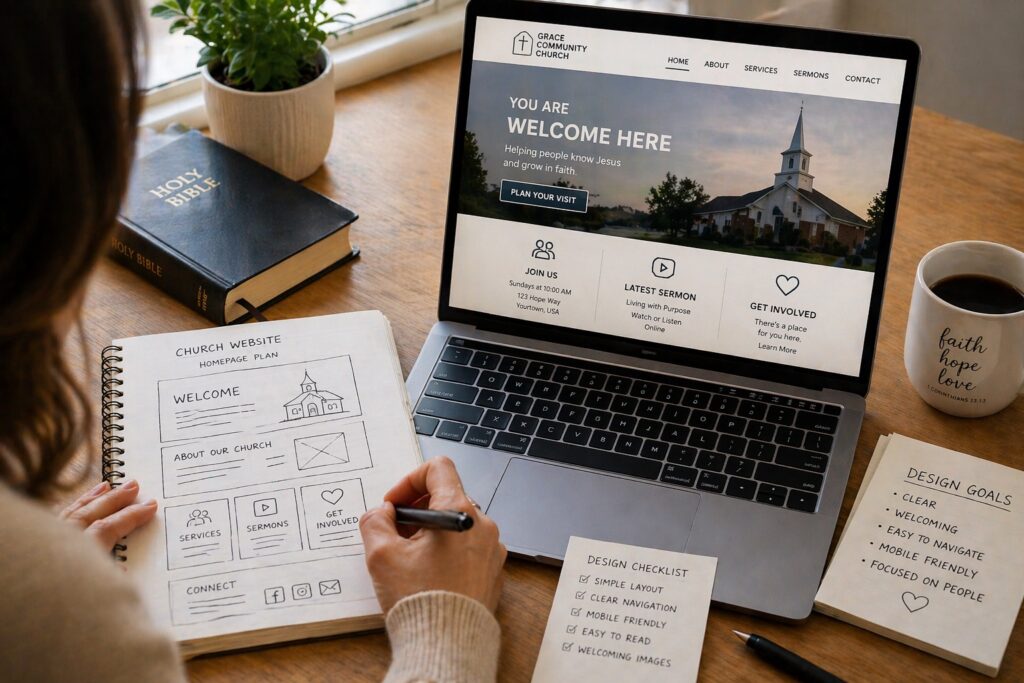
There are ministries doing meaningful work every day, but without a stable online presence, much of that impact remains unseen by the very people who need it most.
If you’re searching for Nonprofit Ministry Website Hosting, you’re not just looking for a technical service. You’re looking for a reliable foundation that supports your mission, protects your content, and allows your ministry to reach people consistently.
Need help building your ministry website step by step?
Use the simple walkthrough that helps you set up your WordPress site with clarity, even if you are starting from scratch.
Start the Click by Click WordPress Faith Blog BuilderHosting may seem like a behind-the-scenes decision, but for nonprofits and ministries, it directly affects how effectively you can serve others online. If your website is unreliable, slow, or hard to maintain, that friction is felt by the very people you hope to help. A strong hosting foundation makes it easier for your ministry to stay visible, accessible, and trustworthy.
What Makes Nonprofit Ministry Hosting Different
At first glance, hosting for a nonprofit ministry may seem similar to hosting for any other website. In some ways it is. But ministry websites often carry a different kind of responsibility. They do not simply promote a service. They support outreach, communication, giving, encouragement, and connection.
Many ministries also operate under unique constraints. Budgets may be limited. Website oversight may be shared by a pastor, a volunteer, or a small team with little technical experience. At the same time, the website may still need to handle donation pages, event details, prayer requests, and updates for the people the ministry serves.
That is why nonprofit ministry hosting should be reliable enough to avoid disruption, simple enough for non-technical users, and flexible enough to grow over time. You do not need something bloated or complicated. You need something dependable.
Why Hosting Directly Impacts Ministry Reach
A ministry website is often more than a digital brochure. It becomes a connection point.
People may visit your site to:
- Learn about your mission
- Find events and ministry updates
- Give donations online
- Reach out for support or prayer
- Read encouraging content or listen to teachings
If the site loads slowly, feels unstable, or is unavailable when needed, those moments of connection can be interrupted. That matters more than many ministries realize. A delay of only a few seconds can be enough to frustrate a visitor. A broken donation page can mean missed support. A site outage during an event announcement can create confusion and unnecessary stress.
Reliable hosting helps reduce those problems by keeping your website accessible, fast, and steady. In practical terms, that means your ministry is easier to find, easier to trust, and easier to engage with.
Understanding Cost vs Stewardship
Many nonprofits naturally focus on keeping costs low, and that makes sense. Stewardship matters. But wise stewardship is not always the same as choosing the lowest monthly price.
Cheap hosting can sometimes come with hidden costs:
- Frequent downtime
- Slower performance
- Poor customer support
- Extra hours spent troubleshooting problems
When those problems keep happening, the real cost becomes larger than the price tag suggests. Time is lost. Opportunities are missed. Frustration increases for the people trying to manage the site.
A better question is not only, “What is the cheapest option?” but also, “What will serve our ministry well over time?” That kind of thinking shifts the focus from short-term savings to long-term faithfulness and stability.
Key Features Nonprofit Ministries Should Prioritize
It helps to keep the decision simple. Instead of trying to understand every technical term, focus on the features that matter most.
1. Uptime Reliability
Your website should be available when people visit. This is especially important for donation pages, event registration, and urgent updates. Reliable uptime means your site is there when it is needed.
2. Speed and Performance
Visitors expect websites to load quickly. A slow site can lower trust and reduce engagement. Fast hosting supports a smoother experience and makes your content easier to access.
3. Security Protection
Ministry websites often handle personal details, prayer requests, contact forms, and sometimes financial transactions. Good hosting should help support security so the information entrusted to your ministry is better protected.
4. Ease of Management
Many ministry websites are not run by developers. Your hosting should reduce technical stress, not increase it. A simple dashboard and straightforward setup can make a big difference for volunteers and small teams.
5. Room to Grow
Even a small ministry can grow faster than expected. As your outreach expands, your website may need more pages, more traffic capacity, more media, or more tools. Good hosting should make growth easier instead of forcing a rebuild.
Shared Hosting vs Managed Hosting
You may come across different types of hosting plans. Two of the most common are shared hosting and managed hosting.
Shared Hosting
Shared hosting is usually the lower-cost option. It can be a practical starting point for smaller ministries with modest traffic. The tradeoff is that your site shares server resources with other websites, which can affect performance if the environment is crowded.
Managed Hosting
Managed hosting typically offers stronger performance, more support, and a smoother experience for growing websites. It can be especially useful for ministries that want higher reliability and less hands-on technical management.
For many nonprofits, the most practical path is simple: start with what fits your current stage, then upgrade when growth makes it necessary.
The Hidden Risk Many Ministries Miss
Some ministries treat hosting as a one-time box to check and then rarely think about it again. But hosting affects much more than the initial launch. It influences performance, visitor experience, long-term stability, and the flexibility of your site as your ministry evolves.
Choosing the wrong hosting can lead to recurring problems, emergency fixes, and unnecessary rebuilding later. Choosing wisely from the start creates stability that supports everything else you build.
If you want to see how hosting fits into the larger structure of church and ministry websites, you can explore this complete guide to church website hosting.
That page connects the broader system, while this article focuses on the unique hosting needs of nonprofit ministries.
Common Mistakes Nonprofits Should Avoid
Choosing Based Only on Price
Short-term savings can easily lead to long-term frustration if performance and support are weak.
Ignoring Support Quality
When problems arise, support matters. Ministries often benefit from responsive help more than they realize.
Not Planning for Growth
Even small ministries can expand in reach, content, and traffic. A little foresight now can prevent major headaches later.
Overcomplicating the Setup
Simple systems are often easier to maintain and sustain, especially when volunteers are involved.
Simple Hosting Checklist for Ministries
- Is the hosting reliable?
- Does the site load quickly?
- Is it secure?
- Is it easy to manage?
- Can it grow with your ministry?
- Will support be there when you need help?
Bridging Mission and Technology
Technology should support ministry, not become a barrier to it. Good hosting helps your team stay focused on people instead of constant website problems. It gives your message a stable place to live online so that your outreach, updates, and opportunities to connect are easier to access.
In that sense, hosting is not merely a technical purchase. It is part of the infrastructure that supports your mission. When it works well, it fades into the background and lets your ministry stay front and center.
Final Encouragement
Choosing Nonprofit Ministry Website Hosting is not about finding the most advanced solution available. It is about finding the right foundation for the stage and calling of your ministry.
You need a foundation that supports your mission, protects your work, and makes growth possible without unnecessary strain. You do not need to overcomplicate the decision. You simply need something reliable, secure, and practical.
Because when your website is stable, your ministry becomes more accessible. And when your ministry is more accessible, more people can be reached, helped, and encouraged.
Ready to build a ministry website on a strong and reliable foundation?
Start with the step by step guide, then explore trusted hosting options that support outreach, stability, and long term ministry growth.
Explore Hosting Picks:
About the Author
I’m Nehemiah Maxwell, a faith-driven writer and content strategist helping Christian women turn ministry ideas into thriving online platforms. Through WhichHostIsBest.com, I teach step-by-step hosting and WordPress strategies that make ministry setup simple so you can focus on what matters most: serving others with clarity and grace. I believe that when faith, clarity, and excellence come together, Kingdom impact multiplies. I’m also the author of If We Hold Fast: What Hebrews Reveals About Salvation, Endurance, and Eternal Security.